
Dr. Thelma G. Alper
A biographical account of her life, work, and legacy
background & personal life
Dr. Thelma Alper was born to a high-achieving Jewish family in Massachusetts. Her academic prowess led her to enter college at a young age, beginning her long career in Academia.
research interests & contributions
Alper had a diverse number of research interests within psychology, looking at personalities, education, and the psychology of women.
activism & adversity
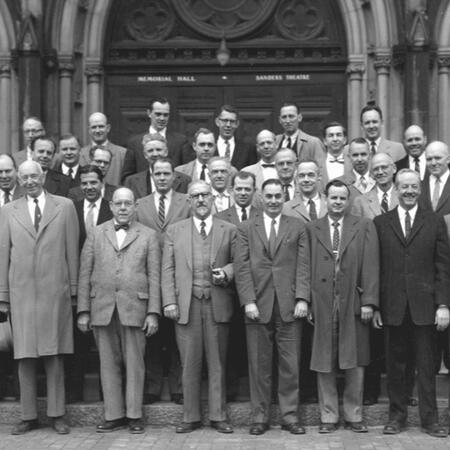
Alper was one of the only female staff in the psychology department at Harvard, facing discrimination from male faculty members and institutional mechanisms.
Legacy
After ending her career as a professor at Wellesley, her accomplishments and work continue to live on in selected texts and journals, but remain largely ignored by modern scholars.
Background & personal life
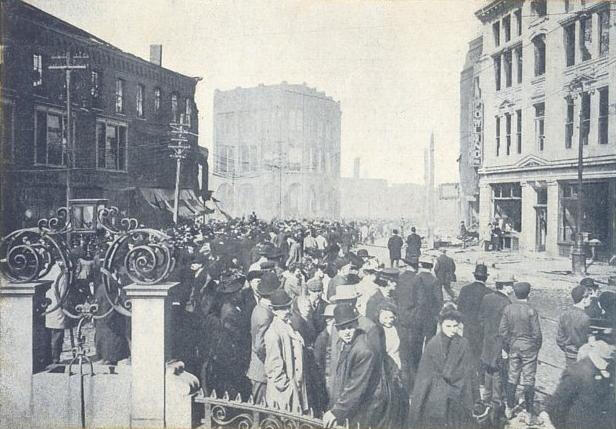
Residents gather in the square in Chelsea, MA after the great fire of 1908
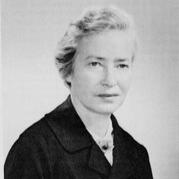
Born to Millie and David Gorfinkle in October 1908, Thelma Alper grew up in Chelsea, MA with an older sister, Bertha. Her family, though achievement-oriented, was not focused on her path toward college. However, Thelma's sister, who was ten years her senior, was committed to pushing Thelma to obtain a college degree. In Alper's reflections on her childhood, she remarks that her sister Bertha was a "brilliant, socially outgoing, and remarkably empathetic" businesswoman. Unfortunately, her sister passed in late 1928 at the age of 30.Due to her academic prowess, Thelma did not have to take the college entrance exam at the time and instead was eligible to begin studying at her choice of university. Though considering Radcliffe College, she ultimately ended up at Wellesley, at her sister's encouragement. She entered college at the age of 17, describing herself as a "shy, socially immature adolescent". She struggled through the first year of her college education, but found excitement in her German courses, leading her to switch her path away from teaching. In terms of psychology, Alper took one course with "Miss Gamble" during her sophomore year, finding it "so cut and dried, so unchallenging, so dull", feeling utterly unimpressed by the subject. During her junior year, she worked at the Judge Baker Guidance Center, issuing Stanford-Binet tests to adolescents up for trial-- her first introduction to work adjacent to clinical psychology. Ultimately, she graduated in the spring of 1929 with a degree of general honors in German.
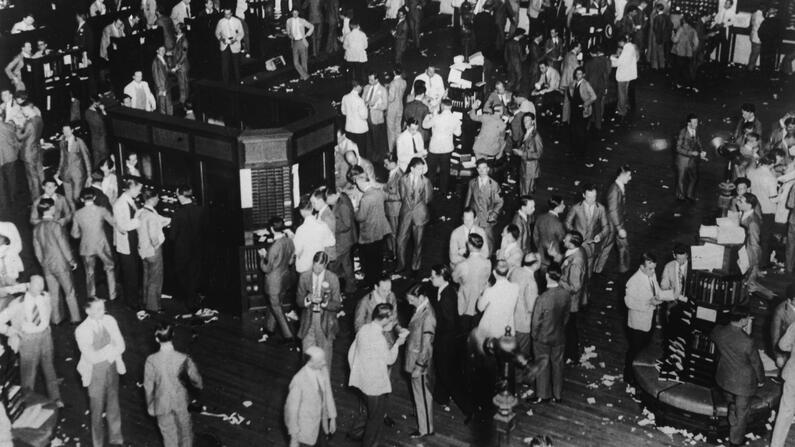
Brokers and investors panic after the stock market crash on Oct. 29th, 1929
Prior to the stock market crash of 1929, there were numerous opportunities available to recent graduates. Unfortunately for Alper, there were few jobs available to those who spoke German, especially after World War I. Despite this, Alper turned down the jobs that she was offered to support her family after the death of her sister. While helping to raise the young boy her sister left behind, she found a job nearby as an assistant to Miss Gamble, her previous psychology professor. Her work included translating German psychological works (a center for psychological research at the time). Through this position, her interest in psychology grew, and she pursued her master's degree at Wellesley concurrently. As she continued her time at Wellesley, she became director of the remedial reading program, trying to help incoming freshman improve their reading skills to be fully prepared for college. She joined the Harvard Graduate School in Education, hoping to better her own education and teaching skills.By 1932, she married a lawyer named Abraham T. Alper, an abnormality for female academics. Her husband not only supported her career, but actively encouraged her to pursue a PhD in the field to further it. At this time, she entered Harvard University, joining the psychology department and becoming the 11th woman to graduate from the department in 1943 (though, her degree was "officially" from Radcliffe due to the regulations at that time). After graduation, she worked in the Harvard psychology department as a tutor and eventually an instructor, leading to controversy as the only woman in the department.After a few difficult years at Harvard, she accepted a position as an associate professor at Clark University, until 1951 when her husband fell ill. At this time, she was offered a tenure-track position at Wellesley and returned to her Alma mater until her retirement in 1973. In 1959, during a brief sabbatical, she reconnected with the Judge Baker Guidance Center. Here, Alper honed her clinical skills and worked towards furthering her clinical psychology education. She continued to work with clients at her private practice until she died in 1988.
Research interests & contributions
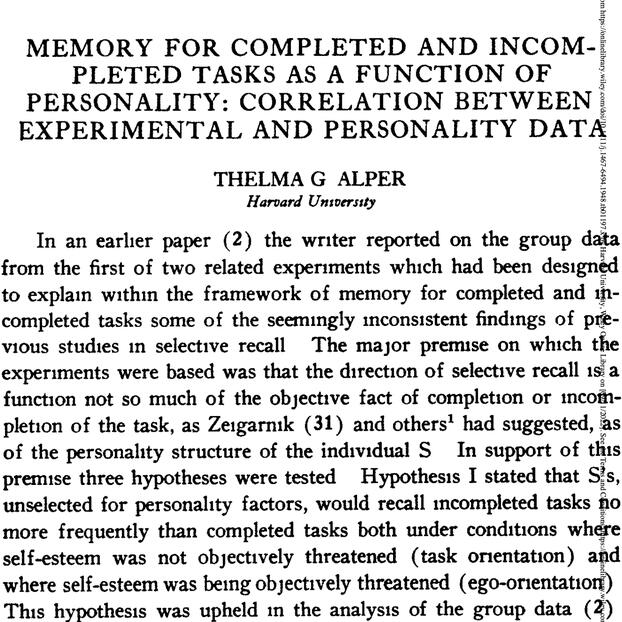
Thelma's published journal article relating to her thesis on memory and personality
When reflecting on her life's work in O'Connell & Russo's Models of Achievement: Reflections of Eminent Women In Psychology, Alper highlights a few key research projects and publications that she took part in. She describes her research interests as being "attracted by controversy", seeking to resolve conflicts between other's research within the field. Her major influences included Freud and his psychodynamic theories, along with the experimental approaches of the Harvard Psychology department she was part of.Her master's thesis on Memory for completed and incompleted tasks was eventually published as a journal article (see image above.) At the time, in the literature, there were two conflicting theories regarding whether completed or incompleted tasks were better remembered by participants. Rosenzweig's experimental data found that completed tasks were better remembered, whereas Zeigarnik's found the opposite to be true. Upon further analysis, Alper found that the experimental stimuli used (the tasks in question) were ultimately completely different in nature, and sought to run a new study that took the task itself into consideration.In Alper's study, she divided tasks into two categories: ego-threatening and non-ego-threatening. Non-ego-threatening tasks included drawing outline faces given a sample face, solving sentences, free drawing, recalling sentences, etc. In contrast, self-esteem-threatening tasks included having a male "accomplice" pretend to solve all the sentences easily while the participant struggled (because the participant was given an objectively unsolvable sentence). Subjects were given the non-threatening tasks before the threatening tasks in two sessions. Her results found that those with "strong ego" personalities performed better under the objective threat of failure, thus recalling incompleted tasks, as their high self-esteem allowed them to enjoy being challenged and not feel the need to defend their ego. On the other hand, those with "weak ego" personalities were not happily challenged when their ego was threatened, and better recalled completed tasks to support their low self-esteem as a defense.The participants of this study (n = 10) were all male undergrads at Harvard, ultimately meaning that the results of her study may not have been completely generalizable. Though there was extensive data on their personalities (from other related experiments in the department), it is difficult to draw an overarching conclusion with such a small sample. Each subject's individual personality impacted their results, making it difficult to parse true causal relationships. Furthermore, with such a small within-subjects design, the order of the tasks (ego-threatening vs non-ego-threatening) could have been randomized to increase validity and provide potentially interesting compelling results had the outcomes been significantly different.
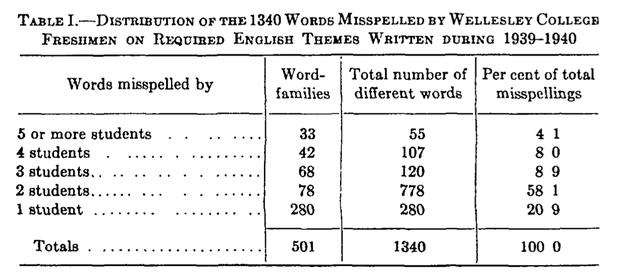
Table from Alper (1942) showing the frequency of misspelled words by incoming students
Another major work of Alper's was the Wellesley Spelling Scale, developed with her colleague Edith Mallory. At this time, they were working to do remedial education with incoming undergraduates and needed a way to assess spelling abilities for this program. Her scale, in contrast to existing measures, sought to identify, analyze and classify spelling errors.To construct this scale, the researchers looked at and tabulated spelling errors from Wellesley freshmen over 10 years, accruing over five thousand data points. These mistakes were then split into different “word family” groupings. It was difficult to establish a scale because only 4.1% of misspellings were shared by 5 or more students, meaning that spelling issues have few commonalities between students. However, since the analyzed papers were written under the best conditions possible (at home, proofread) the misspelled words are still important to look at and use to construct the scale.The test was administered by verbally reading a word, reading it in a sentence, and allowing students to write it on their test. In comparison to another test (the Progressive Test), the Wellesley scale was much more difficult for students, and only three achieved perfect scores. To score this test, the researchers looked at 7 different types of errors and assigned potential causes to them, in order to correct these issues with remedial education.Eventually, the California Test Bureau published and marketed this test, providing both Alper and Mallory royalties in perpetuity. Though in the modern era, students have access to the internet and to spellcheck, this easily-administered test is great for early learners and writers to correct misspellings early on. Clearly, Alper and her colleagues set in motion a precedent for remedial education, and utilized an available large dataset (students at the college) to refine it as much as possible.
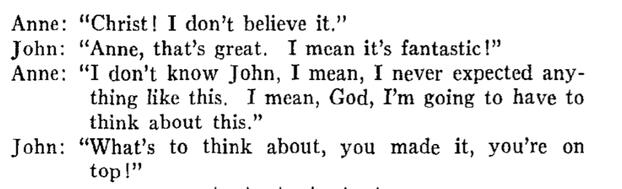
Stimulus from Alper (1974) to determine if women expected or wanted to achieve
The last work that Alper highlights, deals with disputing the previously accepted claim by Matina Horner that women did not want to achieve, and were more concerned about being liked. In her groundbreaking works, she again broke down the issue to the bare bones, looking at different personality types of women to untangle a complicated issue. She points out in Alper (1974) that there are significant gaps in research on women, especially in regard to achievement motivation, which she seeks to fill.To analyze this issue, she created the Wellesley Role-Orientation Scale, seeking to measure where women identified on a scale; either from traditional non-achievement seeking to progressive high-achievement seeking. This scale looked at traits college women regarded as feminine versus masculine, activities they felt were appropriate for their roles as college women, and career activities women found appropriate only for men. The scale was rigorously constructed, using similar scales and measures to check validity (convergent validity) and retesting participants to measure reliability (test-retest reliability).In one of her first studies, she found that women did want to achieve, but they often did not expect to achieve. They displayed avoidance behaviors in situations where they didn't expect success (such as getting to med school). In one example, women were given a stimulus about success as a medical student versus as a nursing student. Given to both nursing students and students enrolled at a liberal arts college, the nursing school stimulus evoked 86% success stories, compared to 20% for medicine.In studies looking at stories about successful women, those on the low end of the scale were afraid that the project necessary to achievement would fail, whereas those on the high end of the scale were afraid that the person or person's relationships were in danger, and often credited men on shared-sex achievements.In another version of these studies, participants looked at images showing different parents facing or averted from their child. Alper found that achievement is more readily evoked by facing parent-child stimuli, but those with high achievement scores associated positive parental feelings towards the child in those scenarios. In other words, high-achieving children had learned to expect positive feelings and affirmations from parents.In regards to these studies, it is ethically questionable to use one's own class as study participants: subjects may feel compelled to participate even if they do not want to, bringing up issues of informed consent. Though the study itself was not necessarily harmful, it still brings into question the appropriateness of using one's own undergraduates in a study, especially on the first day of class!Nonetheless, these studies allowed women to define themselves in some way: because the values were separated between which roles women were oriented towards, this study moved away from the assumption that all women are not achievement oriented/not looking for success. Instead, different values play different roles, allowing women to forge their own pathways.
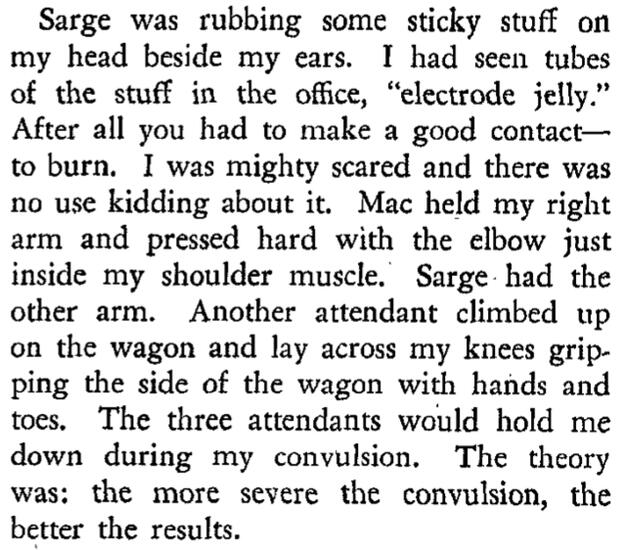
An except from Alper (1948) detailing the patients experience with electric shock therapy
Another important work to mention, in relation to Thelma Alper's clinical work, is her case study where she talked with an electric shock patient about their experiences. Before her work, there were very few case studies that highlighted the subjective experiences of patients in electric shock therapy. In writing this piece, she sought to find out how effective this treatment truly was, especially in the eyes of the patients.In this case study, a former patient writes an account of his experiences with bipolar disorder and getting electric shock treatment. Before treatment, he experienced hallucinations, and with such severity, the doctors decided on this treatment. He went into the treatment anxiously and afterward, was confused, and had trouble remembering, but went along with more treatments passively. However, as time went on, the patient's bipolar cycles stopped, and he no longer experienced persistent mania or hallucinations, but this was very dependent on a close relationship he held with an attendant at the hospital he was in.Ultimately, she concludes this study by cautioning those who chose to recommend electric shock treatment and encourages the use or supplementation of psychotherapy, especially as more research is done and more patients report on their experiences.
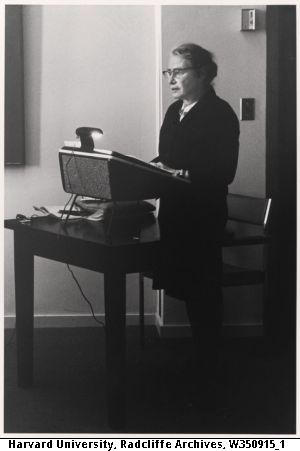
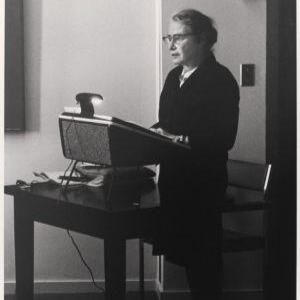
Alper giving a lecture to students at Radcliffe College as part of the Radcliffe Colloquim (1964)
Overall, Alper's academic work primarily dealt with educational psychology, personality psychology, and the psychology of women. Her approach to research was fascinating, as she didn't merely accept experimental results at face value, and instead sought to replicate and distinguish conflicting factors. Though her work may have had flaws, for the time it was far ahead, using good reporting practices, statistical analysis, and thorough measurements. It is therefore interesting to see how her work has not been widely cited in the psychological literature.